Ghost Fitness/Omega-3/Can you break fish oil capsules?
Can you break fish oil capsules?
The short answer
A softgel breaks three ways. On purpose: yes, pierced or snipped and the oil squeezed into food, the dose unchanged and the opened softgel used at once. By accident in the tub: softgels that leak, stick or split have met heat or age, and a tub of broken softgels is bitten for a paint taste and usually replaced. In half to divide a dose: no, a sealed shell of liquid spills rather than divides.
- On purposea clean pin or scissors; the oil into yoghurt, a smoothie or fatty food; used at once
- By accidentleaking, sticking or split softgels: heat or age; the gelatin softened; check for rancidity, usually replace
- In halfspills rather than divides: a smaller softgel or a liquid for a halved dose
- The shell's jobkeeping air and light off the oil: an opened or broken softgel oxidises fast
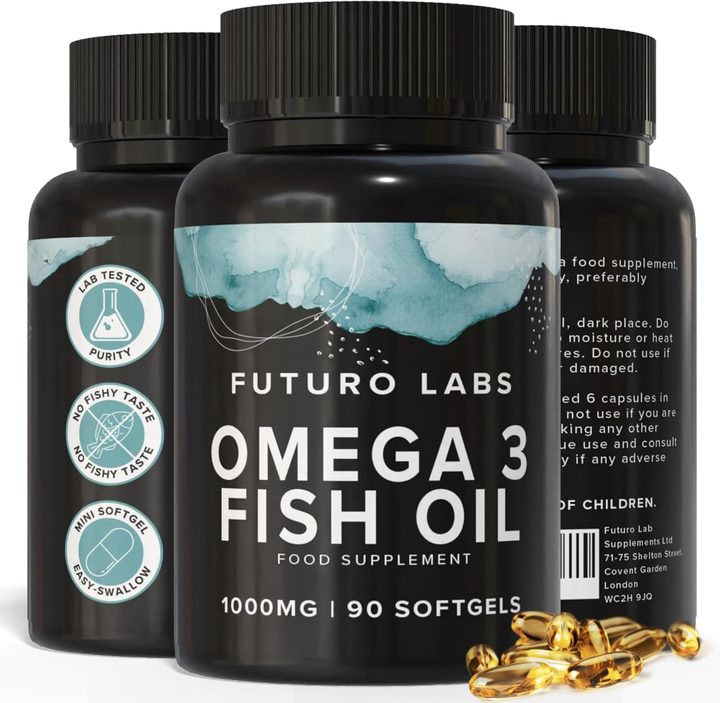
Our brand: the worked example on this page
Futuro Labs Omega 3 Fish Oil
- 17p a day
- 90 softgels, 1 softgel daily
- Lab tested
- Made in the UK
A softgel that opens cleanly on purpose and stays whole in a cool cupboard: Futuro Labs Omega 3 Fish Oil on Amazon UK, 1 softgel with food, 180mg EPA and 120mg DHA, 90 for £14.99 at 17p. Full label breakdown. Cut decoded both ways is on the cut page; storage on the storage page.
The first break, on purpose, how and why, and the shell's job that makes the timing matter
Can you break fish oil capsules is a question with three breaks in it, and the first is the one the reader means. On purpose: yes, a fish oil softgel can be broken open, pierced with a clean pin or the end snipped with scissors and the oil squeezed into a spoon of yoghurt, a smoothie, porridge or a mouthful of fatty food, for a reader who cannot swallow a large softgel, a gag reflex, a child's dose on a doctor's instruction or a preference for tasting nothing by hiding the oil in something strong, the cut-the-capsule page's method and the who-cannot-take page's first cannot. The dose is unchanged by breaking, the oil being the same 300mg of EPA and DHA in a spoon as in a shell, and the absorption is unchanged provided the food it goes into has some fat, the fat-soluble rule applying to a spoonful as to a swallow. The shell's job is what makes the timing matter: a softgel's shell seals the oil away from air and light, the two enemies that oxidise EPA and DHA, so a broken softgel is used at once, never pierced in the morning for the evening or stored open in a pot, and a reader who breaks one and finds the oil tastes strongly of paint rather than mildly of fish has met a rancid oil the shell was hiding and has a tub to replace. A reader who breaks every softgel does better with a liquid fish oil or an emulsified omega-3 by the spoon, kept in the fridge and finished within a month, the formats page's cheaper and easier answer.
The second break, by accident in the tub, what leaking softgels mean, the third break in half, and the breaks filed
The second break is the one a reader finds rather than makes: softgels in the tub that have leaked, stuck together in a clump or split their seams, and they mean heat or age. Gelatin softens above room temperature, and a tub left in a warm kitchen, on a sunny sill, in a car or beside a radiator has its softgels soften, deform and stick, the oil weeping through weakened seams and the shells fusing, the same tub in a cool cupboard staying whole, so a clump of stuck softgels is a storage report before it is a product fault. Age does the same more slowly, old gelatin becoming brittle and cracking, and moisture from a bathroom cabinet softening it. What to do with a tub of broken softgels: bite an intact one for a paint or old-nut taste, since the same heat that softened the gelatin oxidises the oil and a leaking tub is often a rancid tub, and if it tastes of paint, replace the tub and move the next one to a cool dark cupboard or the fridge, and if it tastes mildly of fish, separate the clump, use the intact softgels within a couple of weeks and discard the split ones, whose oil has been in the air. The third break is in half, to divide a dose, and it does not work: a softgel is a sealed shell of liquid, so cutting it in half spills the oil rather than dividing it, a reader who wants half a dose squeezing half the oil into food and discarding the rest, or, more sensibly, buying a smaller 500mg softgel taken once or a liquid measured by the spoon, since an opened half cannot be stored. The breaks filed: on purpose into fatty food and used at once, by accident as a sign of heat or age with a rancidity check and usually a replacement, and in half as a spill rather than a division with a smaller softgel or a liquid as the answer, and the worked example being a softgel that opens cleanly on purpose and stays whole in a cool cupboard, £14.99 for 90 at 17p.
| The break | What it means | What to do |
|---|---|---|
| On purpose | A reader who cannot swallow the softgel | Pierce or snip; squeeze into fatty food; use at once |
| The shell's job | Keeps air and light off the oil | Never open one in advance; taste for paint |
| By accident: leaking, stuck, split | Heat or age softened the gelatin | Bite an intact one; replace if rancid; move the next tub to a cool cupboard |
| In half | A sealed shell of liquid spills | A smaller softgel, or a liquid by the spoon |
| The habitual opener | Every softgel broken | A liquid or an emulsion: cheaper and easier |
| The dose | Unchanged by opening | The same 300mg in a spoon as in a shell |
The verdict, yes on purpose, a warning by accident, and no in half
Can you break fish oil capsules: yes on purpose, a softgel pierced or snipped and its oil squeezed into yoghurt, a smoothie or fatty food with the dose unchanged and the opened softgel used at once because the shell was keeping air and light off the oil, with a liquid the better format for a habitual opener; a warning by accident, softgels that leak, stick together or split having met heat or age, the gelatin softened in a warm cupboard or a car, so that a tub of broken softgels is bitten for a paint taste and usually replaced and the next tub kept cool; and no in half, a sealed shell of liquid spilling rather than dividing, a halved dose being a smaller softgel or a liquid by the spoon. A softgel that opens cleanly and stays whole in a cool cupboard: Futuro Labs Omega 3 Fish Oil, one with food, 180mg EPA and 120mg DHA, 90 for £14.99 at 17p a day.
What to check on the label
- Break one on purpose if you must: a pin or scissors, into fatty food, at once.
- Read a clump of stuck softgels as heat: check for rancidity, replace if needed.
- Never cut one in half: it spills.
- Use a smaller softgel or a liquid for half a dose: not a halved shell.
- Keep the tub cool: gelatin softens and oil oxidises in warmth.
Our brand
The worked example: Futuro Labs Omega 3 Fish Oil
Futuro Labs Omega 3 Fish Oil: 1 softgel daily with food, 1000mg fish oil providing 180mg EPA and 120mg DHA (300mg combined), 90 softgels for £14.99, 17p a day, lab-tested purity, UK GMP made. Gelatin shell, so not vegetarian.
- Fish oil per softgel
- 1000mg
- EPA / DHA per softgel
- 180mg / 120mg (300mg combined)
- Serving
- 1 softgel a day
- Bottle
- 90 softgels, 90 days
- Price
- £14.99 (17p a day)
- Softgel
- mini softgel, no fishy taste
Questions people also ask
Can I open a fish oil capsule and take the oil?
Yes: pierce the softgel with a clean pin or snip the end and squeeze the oil into yoghurt, a smoothie or a mouthful of fatty food, the dose and the absorption unchanged, and use it at once, since the shell was sealing the oil from the air and light that oxidise it.
Why are my fish oil capsules leaking and stuck together?
Heat or age: gelatin softens above room temperature, so a tub kept in a warm kitchen, on a sunny sill or in a car has its softgels deform, weep oil through weakened seams and fuse into a clump, and old gelatin cracks; bite an intact one for a paint taste, replace the tub if rancid and keep the next one in a cool dark cupboard.
Are leaking fish oil capsules safe to take?
Only if the oil is still fresh: the same heat that softened the gelatin oxidises the oil, so a leaking tub is often a rancid tub, checked by biting an intact softgel, with the split ones discarded because their oil has been in the air and the intact ones used within a couple of weeks if they taste mildly of fish.
Can I cut a fish oil capsule in half to take a smaller dose?
No: a softgel is a sealed shell of liquid, so cutting it spills the oil rather than dividing it, and a halved dose is a smaller 500mg softgel taken once or a liquid fish oil measured by the spoon, since an opened half cannot be stored.
What is the best format for someone who opens every capsule?
A liquid fish oil or an emulsified omega-3 taken by the spoon, kept in the fridge and finished within a month, which delivers more per dose at a lower price per milligram than opening softgels one at a time and, for the emulsion, absorbs well without a fatty meal.
Sources
- The fish oil oxidation literature: oxidation is measured by peroxide value, anisidine value and their combination as TOTOX, with the industry monograph setting limits of 5, 20 and 26 respectively, and surveys of retail fish oils finding a meaningful share above those limits, freshness being a quality dimension a label rarely shows and a certificate does. PubMed record
- The omega-3 delivery-format literature: softgels, liquids and emulsions deliver EPA and DHA as oil, emulsions absorbing well without a fatty meal, while microencapsulated omega-3 powders pressed into tablets or gummies carry low actives per unit and are reviewed on the same EPA and DHA arithmetic. PubMed record
- Classic absorption work on fish oil ethyl esters: uptake is markedly higher when ethyl ester omega-3 is taken with a high-fat meal, narrowing the gap to triglyceride forms. PubMed record
- The habit formation literature: anchoring a new behaviour to an existing daily routine is the best-documented adherence strategy, with consistency outperforming timing choices. PubMed record