Ghost Fitness/Omega-3/Is 1000mg of EPA and DHA too much?
Is 1000mg of EPA and DHA too much?
The short answer
No: a gram of EPA and DHA a day is the best-tested dose in the omega-3 literature. It is the dose the cardiovascular outcome trials gave to tens of thousands for years with no organ harm, the omega-3 index research target, a fifth of the five-gram safe level, and below the dose at which the atrial fibrillation signal appears. It is the top of the practical range for a healthy adult.
- The outcome trialsaround a gram a day to tens of thousands for five to seven years: slightly more minor bleeding; no organ harm
- The index researcharound a gram a day: the intake associated with a favoured red-cell level
- The ceilingsa fifth of the five-gram safe level; below the atrial fibrillation signal at two to four grams
- In softgelsthree standard, or one concentrate; the top of the practical range
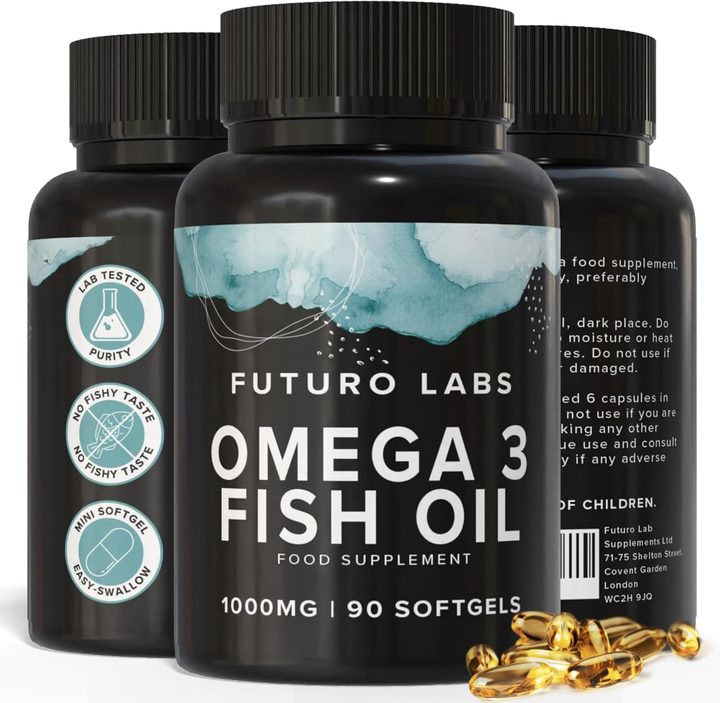
Our brand: the worked example on this page
Futuro Labs Omega 3 Fish Oil
- 17p a day
- 90 softgels, 1 softgel daily
- Lab tested
- Made in the UK
A third of a gram a softgel, three to the gram: Futuro Labs Omega 3 Fish Oil on Amazon UK, 1 to 3 softgels with food, 180mg EPA and 120mg DHA each, 90 for £14.99 at 17p. Full label breakdown. 1000mg decoded both ways is on the 1000mg page; whether it is enough on the 1000mg enough page.
No, because a gram of EPA and DHA is the dose the literature knows best
Is 1000mg of EPA and DHA too much, and the variant asking whether 1000 EPA and DHA is too much, are answered no with unusual confidence, because a gram of EPA and DHA a day is not merely a safe dose but the best-tested dose in the whole omega-3 literature, the one the largest and longest trials chose. The outcome trials: the large randomised cardiovascular outcome trials, the ones that gave omega-3 or placebo to tens of thousands of adults in primary and secondary prevention and followed them for five to seven years counting every event, gave around a gram of EPA and DHA a day, and their safety findings at that dose are the strongest long-term file any supplement has, slightly more minor bleeding, nosebleeds and bruising, no serious bleeding excess, no organ harm, no cancer signal and no accumulation, the safety page's file and the reason a gram is the dose a reader can take for years on the best evidence there is. The index research: around a gram a day is also the intake the omega-3 index research associates with a red-cell EPA and DHA level in the range the observational studies favour, a research target rather than a claim and the reason a gram is the rung a healthy adult climbs to. The ceilings: a gram is a fifth of the regulator's five-gram safe level for supplemental EPA and DHA, set after weighing bleeding, lipids, glycaemic control and immune function, and it sits below the dose at which the outcome trials' dose-related atrial fibrillation signal appears, that signal being most evident at four grams, present at around two and small or absent below a gram, the high-dose page's honest ceiling. Three numbers, a gram inside all of them.
What a gram is in softgels and on a plate, who takes more and who takes less, and the gram filed
What a gram is in practice: three standard 1000mg softgels at 300mg of EPA and DHA each, or one premium concentrate at a gram per softgel, or a liquid by the spoon, taken mid-meal at the day's fattiest plate, the pence per hundred milligrams arithmetic deciding between three standard softgels at about 51p and a concentrate at 50 to 80p, the premium concentrate page's finding that the two often cost the same per milligram. On a plate, a gram a day on average is about two and a half oily fish portions a week, a fillet of salmon or mackerel carrying around two grams, so a reader who eats oily fish three times a week is at the gram without a softgel and a reader who eats it once is halfway there with a softgel or two to make up the rest, the increase-your-omega-3 page's table. Who takes less: a reader on rung one, the 250mg heart claim, who has no reason for a gram and takes a standard softgel, and a reader who eats oily fish twice a week and takes none, the gram being the top of the practical range rather than its floor. Who takes more: a reader with a triglyceride or blood pressure reason and a GP, at the two- and three-gram claim doses with their five-gram statement, and a prescriber's patient at four, the rungs above a gram carrying the loose stools, the LDL note, the antiplatelet conversation and the atrial fibrillation signal that a gram does not. A reader on a gram who worries it is too much has, in almost every case, read the number off a fish oil label as oil weight, 1000mg of fish oil being a third of a gram of actives and the commonest confusion on the shelf, the decoded-both-ways page's first reading, and a reader who genuinely takes a gram of actives is on the dose the trials took for years. The gram filed: not too much, the outcome trials' dose for years in tens of thousands, the index target, a fifth of the safe level and below the atrial fibrillation signal, the top of the practical range in three standard softgels or one concentrate, with the worked example being a third of a gram a softgel and three to the gram, £14.99 for 90 at 17p each.
| The evidence | What a gram is there | The consequence |
|---|---|---|
| The cardiovascular outcome trials | Around a gram a day for five to seven years in tens of thousands | Minor bleeding, no organ harm: the safety file |
| The omega-3 index research | The intake associated with a favoured red-cell level | The research target; the rung a healthy adult climbs to |
| The regulator's safe level | A fifth of five grams | Room above |
| The atrial fibrillation signal | Below the two-to-four-gram range where it appears | The honest ceiling sits above a gram |
| In softgels and on a plate | Three standard softgels, or one concentrate; about two and a half oily fish portions a week | The practical range's top |
| The confusion to avoid | 1000mg of fish oil is a third of a gram of actives | Read the EPA and DHA line |
The verdict, a gram is the dose the trials trusted for years, and a healthy adult's ceiling of usefulness
Is 1000mg of EPA and DHA too much: no, a gram of EPA and DHA a day being the best-tested dose in the omega-3 literature, the dose the cardiovascular outcome trials gave to tens of thousands of adults for five to seven years with slightly more minor bleeding and no organ harm, the intake the omega-3 index research associates with a favoured red-cell level, a fifth of the regulator's five-gram safe level, and a dose below the two-to-four-gram range where the atrial fibrillation signal appears, so that it is the top of the practical range for a healthy adult, three standard softgels or one concentrate at the day's fattiest meal, with the rungs above it needing a reason and a GP. Three to the gram: Futuro Labs Omega 3 Fish Oil, one to three softgels with food, 180mg EPA and 120mg DHA each, 90 for £14.99 at 17p.
What to check on the label
- Know the trials' dose: a gram, for years, in tens of thousands.
- Know the index target: a gram.
- Place it under the ceilings: a fifth of five grams; below the AF signal.
- Count it in softgels: three standard, or one concentrate.
- Check you read actives, not oil: 1000mg of fish oil is a third of a gram.
Our brand
The worked example: Futuro Labs Omega 3 Fish Oil
Futuro Labs Omega 3 Fish Oil: 1 softgel daily with food, 1000mg fish oil providing 180mg EPA and 120mg DHA (300mg combined), 90 softgels for £14.99, 17p a day, lab-tested purity, UK GMP made. Gelatin shell, so not vegetarian.
- Fish oil per softgel
- 1000mg
- EPA / DHA per softgel
- 180mg / 120mg (300mg combined)
- Serving
- 1 softgel a day
- Bottle
- 90 softgels, 90 days
- Price
- £14.99 (17p a day)
- Softgel
- mini softgel, no fishy taste
Questions people also ask
Is 1 gram of omega-3 a day safe?
Yes, on the strongest evidence any supplement dose has: the cardiovascular outcome trials gave around a gram of EPA and DHA a day to tens of thousands of adults for five to seven years and found slightly more minor bleeding, no organ harm, no cancer signal and no accumulation, with the dose sitting a fifth of the way to the safe level and below the atrial fibrillation signal.
Is 1000mg of EPA and DHA a good daily dose?
For a healthy adult who wants the omega-3 index research target, yes, the intake associated with a favoured red-cell level and the top of the practical range; for a reader who wants only the 250mg heart claim, more than needed, one standard softgel doing that.
How many fish oil capsules is 1000mg of EPA and DHA?
Three standard 1000mg softgels at 300mg of EPA and DHA each, or one premium concentrate at a gram per softgel, or a liquid by the spoon, taken mid-meal at the day's fattiest plate, with the two options often costing the same per milligram.
Can I get 1000mg of EPA and DHA from food?
Yes: a fillet of salmon or mackerel carries around two grams, so oily fish about two and a half times a week averages a gram a day, and a reader who eats it once a week makes up the rest with a softgel or two.
Is 1000mg of EPA and DHA the same as 1000mg of fish oil?
No, by a factor of about three: 1000mg of fish oil at a standard 30% is around 300mg of EPA and DHA, so a reader who read 1000mg off a front label and worries it is too much is usually on a third of a gram of actives, and a reader genuinely on a gram of actives is on the trials' dose.
Sources
- The large cardiovascular outcome trials of omega-3: around a gram a day of EPA and DHA in primary-prevention populations produced no meaningful reduction in major cardiovascular events, while four grams of purified EPA in people with raised triglycerides on statins reduced events in one large trial, so the supplement-dose story is maintenance and the treatment-dose story is a prescription. PubMed record
- Harris WS, von Schacky C. The omega-3 index: red blood cell EPA and DHA as a measurable marker of omega-3 status, the research standard for judging how effectively intake raises tissue levels. PubMed record
- EFSA Panel on Dietetic Products. Scientific opinion on the tolerable upper intake level of EPA, DHA and DPA: supplemental intakes of EPA and DHA combined up to about 5g/day do not raise safety concerns for adults. EFSA Journal 2012;10(7):2815. https://www.efsa.europa.eu/en/efsajournal/pub/2815
- Meta-analyses of cardiovascular outcome trials of marine omega-3: a dose-related increase in the risk of atrial fibrillation, most evident at doses of four grams a day and small or absent below one gram, a finding that sets the honest ceiling of high-dose omega-3 for a healthy adult. PubMed record