Ghost Fitness/Lion's mane/Lion's mane vs creatine: which is better for brain health?
Lion's mane vs creatine: which is better for brain health?
The short answer
Brain health is mostly vascular and behavioural: exercise, sleep and heart health carry the real evidence, and DHA holds the only brain claim. Creatine's emerging cognition file and lion's mane's one MCI trial are both footnotes, creatine's the larger.
- What brain health mostly isvascular and behavioural: what protects the heart protects the brain
- The real evidenceexercise, blood pressure, sleep, not smoking: the long-horizon file
- The one claimDHA at 250mg: maintenance of normal brain function
- The two footnotescreatine's emerging cognition file; lion's mane's single MCI trial
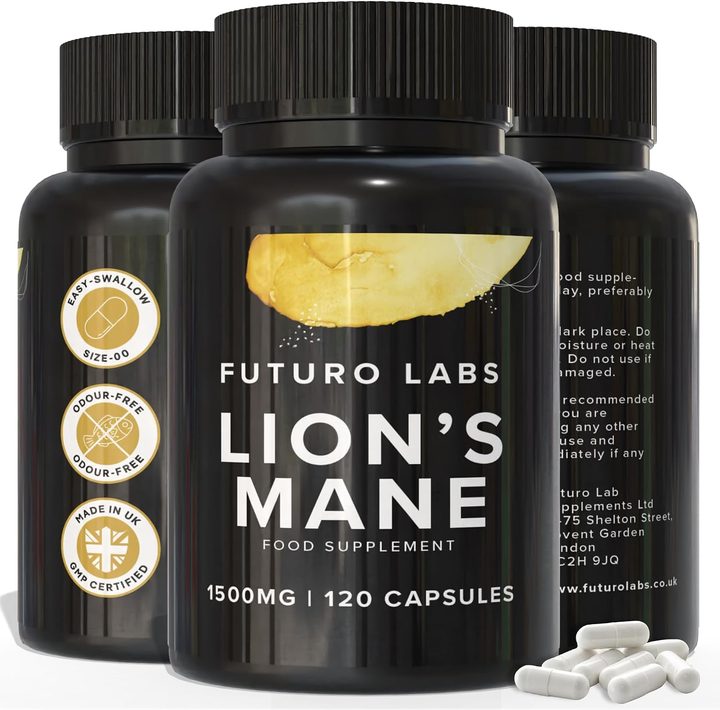
Our brand: the worked example on this page
Futuro Labs Lion's Mane
- 13p a day
- 120 capsules, 1 capsule daily
- Lab tested
- Made in the UK
The smaller footnote, priced as one: Futuro Labs Lion's Mane on Amazon UK, 5:1 fruiting body extract at 13p a day, no brain claim, one MCI trial. Full label breakdown. DHA's brain claim lives in the omega-3 section; the creatine evidence gap on the creatine-versus page.
Brain health returned to its real owners, because the phrase is a long-horizon one that no capsule leads
Brain health is a different phrase from focus or fog, a long-horizon phrase about how a brain ages and whether it stays sharp for decades, and the honest first move is to return it to its real owners before comparing two capsules, because the long-horizon brain evidence is overwhelmingly vascular and behavioural. What protects the heart protects the brain: blood pressure kept in range, not smoking, weight and blood sugar managed, and above all regular exercise, the physical-activity-and-cognitive-ageing literature being the strongest modifiable-factor evidence in the whole field, dementia-risk work consistently ranking cardiovascular and lifestyle factors far above any supplement, with sleep close behind for its consolidation and clearance roles, hearing looked after, social and cognitive engagement kept up, and alcohol moderated, a file this training audience is already investing in every session without a capsule in sight. The register agrees on the one supplement it lets near the phrase: maintenance of normal brain function belongs to DHA at 250mg daily, the omega-3 section's business, the only brain-worded authorised claim, held by a fatty acid rather than by either product in this versus, so the honest ranking for brain health reads exercise, cardiovascular health and sleep first, DHA as the one lawful supplement sentence, and everything else, including both halves of this query, as footnotes.
The two footnotes compared honestly, the larger one named, and the verdict placed where the evidence lives
Compare the footnotes as footnotes. Creatine's brain-health entry is an emerging file rather than a claim: the brain uses creatine for energy buffering, supplementation raises brain creatine measurably, and small trials report cognitive-task effects under sleep deprivation and in vegetarians whose dietary creatine runs lowest, with research interest growing in creatine and brain energy metabolism more broadly, all described as research, no cognitive claim held, but a file that is real, growing, and free to a lifter already taking 3g for its authorised performance claim. Lion's mane's brain-health entry is, ironically, the closest thing either product has to a long-horizon trial: Mori's 16-week study in older Japanese adults with mild cognitive impairment, cognitive scores improving and fading after cessation, one small trial in a clinical population with the extrapolation gap to a healthy lifter unbridged, joined by the Docherty pilot's acute task finding, two studies, no claim, thin. Set side by side, creatine's footnote is the larger, more replicated and more mechanistically grounded, lion's mane's the more directly aimed at ageing cognition and the smaller, and neither approaches the file that exercise and vascular health hold, which is the verdict's shape: for brain health, train, sleep, keep the blood pressure and the smoking where they should be, cover DHA per the omega-3 pages, and treat creatine's emerging file as a free bonus of the tub already in the bag and lion's mane's single trial as a 13p flat-expectations bet, the worked example priced for exactly that footnote, with creatine the better of the two footnotes and the gym the better of everything.
| The tier | The entry | The honest note |
|---|---|---|
| The owners | Exercise, blood pressure, not smoking, sleep | The strongest modifiable-factor evidence in the field |
| The one claim | DHA at 250mg: brain function | Held by an omega-3, not by either product here |
| Creatine's footnote | Emerging cognition file; brain creatine measurably raised | Real, growing, no claim; free at the lifter's 3g |
| Lion's mane's footnote | One 16-week MCI trial and a pilot | The closest to a long-horizon trial; thin; gap unbridged |
| The comparison | Creatine's footnote is the larger | Neither approaches the owners' file |
| The verdict | Train, sleep, cover DHA; footnotes after | Creatine already owned; lion's mane 13p |
The verdict, placed with the owners of the phrase
Lion's mane versus creatine for brain health: the phrase belongs to blood vessels and habits, exercise, blood pressure, not smoking and sleep carrying the long-horizon evidence and DHA at 250mg holding the register's only brain sentence, with both products footnotes beneath that file, creatine's emerging cognition file the larger and better grounded and free at the lifter's existing 3g, lion's mane's single MCI trial the smaller and the more directly aimed, a 13p flat-expectations bet. The smaller footnote, priced honestly: Futuro Labs Lion's Mane, 5:1 fruiting body extract, one capsule daily, UK made, lab tested, £15.49 for 120 days at 13p a day, filed beneath the gym, the sleep and the omega-3 aisle, where brain health was always kept.
What to check on the label
- Return the phrase to its owners: vascular health and habits.
- Train for the brain: exercise is the field's strongest lever.
- Cover the one claim: DHA at 250mg, in its own section.
- Rank the footnotes honestly: creatine's larger, lion's mane's thinner.
- Price both as footnotes: creatine free at 3g, the mushroom 13p.
Our brand
The worked example: Futuro Labs Lion's Mane
Futuro Labs Lion's Mane: 1 capsule daily of 5:1 fruiting body extract, labelled 1500mg mushroom equivalent (about 300mg extract), 120 capsules for £15.49, 120 days at 13p a day. Vegan HPMC shell, UK made under GMP and BRC, independently lab tested, caffeine free. Lion's mane holds no authorised UK health claims; this site describes its small studies as studies.
- Extract
- fruiting body, 5:1
- Per capsule
- 1500mg mushroom equivalent
- Serving
- 1 capsule a day
- Bottle
- 120 capsules, 120 days
- Price
- £15.49 (13p a day)
- Capsule
- HPMC vegan shell, size 00
Questions people also ask
What actually protects brain health long term?
Vascular and behavioural factors: regular exercise, blood pressure in range, not smoking, managed weight and blood sugar, good sleep, hearing looked after and social engagement, ranked far above any supplement.
Which supplement holds a brain-health claim?
DHA, at 250mg daily: maintenance of normal brain function, the register's only brain-worded authorised sentence, held by an omega-3 and covered in that section.
Is creatine good for the brain?
An emerging file, not a claim: supplementation raises brain creatine measurably, small trials report cognitive-task effects under sleep deprivation and in vegetarians, and the research interest is growing, free to a lifter already at 3g.
Does lion's mane have any brain-health trial?
One: Mori's 16-week study in older adults with mild cognitive impairment, scores improving and fading after stopping, a small clinical-population trial with the gap to healthy lifters unbridged, plus a small pilot.
So which is better for brain health, creatine or lion's mane?
Creatine's footnote is the larger and better grounded, lion's mane's the thinner, and neither approaches the evidence that training, sleep and cardiovascular health carry, which is where the phrase belongs.
Sources
- The brain health and cardiovascular literature: exercise, blood pressure, sleep and vascular health carry the strongest evidence for cognitive ageing and dementia risk, ahead of any supplement. PubMed record
- The creatine and cognition literature: trials of creatine supplementation on cognitive tasks, notably under sleep deprivation and in vegetarians, report interesting but preliminary effects with no authorised claim. PubMed record
- Mori K, Inatomi S, Ouchi K, Azumi Y, Tuchida T. Improving effects of the mushroom Yamabushitake (Hericium erinaceus) on mild cognitive impairment: a double-blind placebo-controlled clinical trial. Phytotherapy Research 2009;23(3):367-372. PubMed record
- The GB nutrition and health claims register, cognitive entries: iron, zinc and iodine hold normal cognitive function; B vitamins hold normal psychological function; pantothenic acid holds normal mental performance; DHA holds maintenance of normal brain function at 250mg. https://www.gov.uk/government/publications/great-britain-nutrition-and-health-claims-nhc-register