Ghost Fitness/Lion's mane/What are the best lion's mane tablets?
What are the best lion's mane tablets?
The short answer
The aisle is capsules for a reason: loose extract fills a shell without the binders compression demands, so lion's mane tablets are rare, adding excipients to audit. If you need tablets, run the same four tests plus the excipient line.
- The aisle's shapecapsule-dominated: loose extract needs no binders in a shell
- The tablet's taxcompression demands binders, glidants and coatings
- The added checkthe excipient line: read what the pressing added
- The unchanged examtissue, ratio, testing, pence: format never waives it
Our brand: the worked example on this page
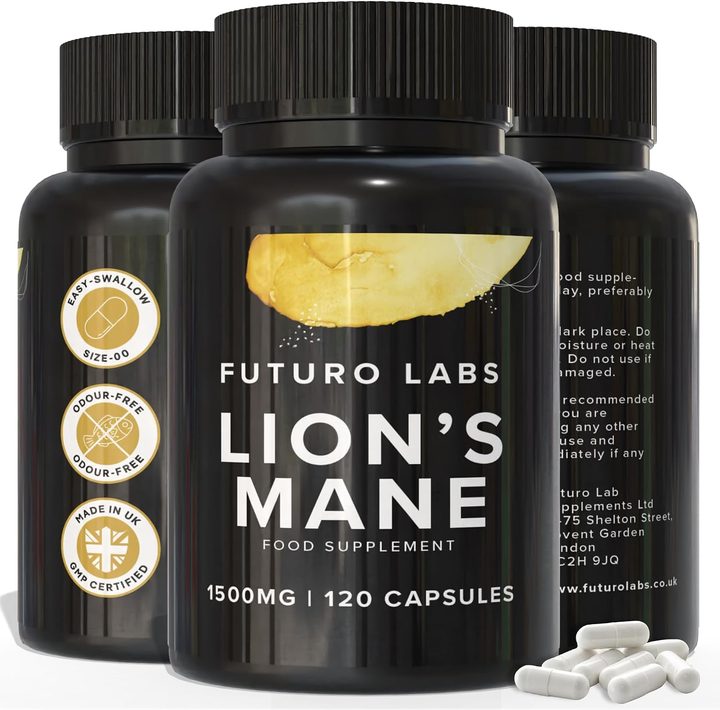
Futuro Labs Lion's Mane
- 13p a day
- 120 capsules, 1 capsule daily
- Lab tested
- Made in the UK
The aisle's standard format, done properly: Futuro Labs Lion's Mane on Amazon UK, 1 capsule of 5:1 fruiting body extract, 1500mg equivalent, HPMC shell, £15.49 for 120 days at 13p. Full label breakdown. The consumption tour is on the consume page; the ten-point inspection on the buying page.
Why the lion's mane aisle standardised on capsules, taught from the manufacturing up
Search for lion's mane tablets and the first honest finding is scarcity, because this aisle standardised on capsules for manufacturing reasons worth teaching rather than waving at. A capsule is a container, two shell halves filled with loose powder, and mushroom extracts, light, somewhat fluffy, hygroscopic powders, pour into shells with nothing added beyond a declared bulking agent to fill the space, which is why a clean capsule label can read as shortly as the worked example's, extract, brown rice flour, HPMC shell, done. A tablet is a compression, powder pressed under force into a self-holding shape, and pressing demands helpers: binders to make particles adhere, microcrystalline cellulose and its relatives; glidants and lubricants so the powder flows and releases from dies, silica and magnesium stearate typically; disintegrants so the finished tablet breaks apart in the gut rather than passing as a pebble; and often a coating for swallowability and moisture defence, each helper ordinary, food-grade and lawful, and each another line on the ingredients list between the buyer and the mushroom, with the practical ceiling the collagen tablet pages taught applying here too, compression capping per-unit content so that fluffy extracts fit worse into tablets than into shells. None of that makes tablets wrong, and the format holds real advantages for some buyers, splittability along a score line, sturdiness in a gym bag or pill organiser, and, for the minority who dislike capsule shells or need gelatine-free certainty without checking, a familiar shape; it simply explains the shelf, the aisle is capsules because the material and the format agree, and tablets are the exception that arrives carrying extra lines to read.
The exception audited properly, the excipient line taught, and the format verdict filed
For the buyer who wants or needs tablets, the audit is the section's standing exam plus one added paper: the four tests run unchanged, fruiting body stated, ratio stated with its equivalent maths, testing and manufacture shown, pence divided at the label's directions, format never waiving a single one, and then the excipient line is read with the tablet-specific questions, what did the pressing add, are the helpers the ordinary food-grade cast, cellulose, silica, stearate, or a longer parade suggesting the mushroom is the minority shareholder in its own tablet, does the stated extract content survive next to the helper weights, the reconciliation arithmetic from the inspection page, and is a coating declared and identified for anyone tracking shellac, titanium dioxide's replacements or vegan status, with the vegan check moving from the shell material, a capsule question, to the coating and stearate sources, the tablet's version. The comparison filed straight: at equal stated extract, equal tissue and equal ratio, capsule versus tablet is preference, swallowing, splitting, organiser-hardiness, not potency, the mushroom indifferent to its packaging, and the market reality is that the capsule shelf offers far more products passing the tests, so the honest best-tablets answer is conditional, the best lion's mane tablet is whichever rare tablet passes the four tests with a short, ordinary excipient line, and the best purchase for most readers arriving here is the aisle's standard answered properly, the worked example's single capsule of stated 5:1 fruiting body extract at 13p, chosen not because shells are magic but because that is where this aisle's honest labels overwhelmingly live.
| The item | Tablets | Capsules |
|---|---|---|
| The construction | Powder compressed: binders, glidants, disintegrants | Loose fill in a shell: extract plus named filler |
| The added reading | The excipient line and any coating | The shell material: HPMC or gelatine |
| Per-unit ceilingOurs | Compression caps fluffy extracts lower | Size-00 fills carry the stated dose |
| The advantages | Score-line splitting; organiser sturdiness | Shorter labels; the aisle's honest majority |
| The unchanged exam | Four tests, no waivers | Four tests, no waivers |
| The market reality | Rare passers | Where the passing labels live, at 13p |
The verdict, pressed and filed
The best lion's mane tablets: the rare ones passing the unchanged four tests with a short, ordinary excipient line, cellulose, silica, stearate and a declared coating being the acceptable cast, the format taxed by compression's helpers and per-unit ceilings rather than by any potency difference, and the aisle's capsule dominance explained by manufacturing rather than fashion, loose extract and shells simply agreeing. The standard format's worked example: Futuro Labs Lion's Mane, one capsule of 5:1 fruiting body extract labelled 1500mg mushroom equivalent, brown rice flour named, vegan HPMC shell, UK made, lab tested, £15.49 for 120 days at 13p a day, a three-line ingredients list that is the whole argument for the aisle's chosen format.
What to check on the label
- Understand the aisle's shape: loose extract and shells agree.
- Tax the tablet honestly: binders, glidants, coatings, ceilings.
- Run the exam unchanged: format waives no test.
- Read the excipient line: short and ordinary passes.
- Let preference decide the tie: potency never differs by packaging.
Our brand
The worked example: Futuro Labs Lion's Mane
Futuro Labs Lion's Mane: 1 capsule daily of 5:1 fruiting body extract, labelled 1500mg mushroom equivalent (about 300mg extract), 120 capsules for £15.49, 120 days at 13p a day. Vegan HPMC shell, UK made under GMP and BRC, independently lab tested, caffeine free. Lion's mane holds no authorised UK health claims; this site describes its small studies as studies.
- Extract
- fruiting body, 5:1
- Per capsule
- 1500mg mushroom equivalent
- Serving
- 1 capsule a day
- Bottle
- 120 capsules, 120 days
- Price
- £15.49 (13p a day)
- Capsule
- HPMC vegan shell, size 00
Questions people also ask
Why are lion's mane tablets so hard to find?
Manufacturing: fluffy mushroom extracts pour into capsule shells with just a named filler, while tablets demand binders, glidants and coatings and cap per-unit content lower, so the aisle standardised on shells.
Are tablets weaker than capsules?
Not at equal stated extract: the mushroom is indifferent to packaging, and the differences are the excipient line, per-unit ceilings and splittability, never potency at the same declared dose.
What should a lion's mane tablet's ingredients list look like?
The extract plus a short ordinary cast: microcrystalline cellulose, silica, magnesium stearate and a declared coating, with a longer parade suggesting the mushroom is the minority shareholder.
How do vegans check a tablet versus a capsule?
The question moves: capsules turn on the shell, HPMC versus gelatine, while tablets turn on the coating and stearate sources, both readable on the ingredients line.
Should I hold out for tablets or just buy capsules?
Unless splitting or organiser-sturdiness genuinely matters, buy the aisle's standard: the capsule shelf holds nearly all the labels that pass the four tests, the worked example at 13p among them.
Sources
- The medicinal mushroom labelling discussion: fruiting body versus mycelium-on-grain, extract ratios and beta-glucan content as the label facts that separate concentrated extracts from diluted powders. PubMed record
- EFSA Panel on Dietetic Products, Nutrition and Allergies. Scientific Opinion on the substantiation of health claims related to magnesium. EFSA Journal 2010;8(10):1807. https://efsa.onlinelibrary.wiley.com/doi/10.2903/j.efsa.2010.1807
- Retained Regulation (EC) No 1924/2006 on nutrition and health claims made on foods, and the Great Britain nutrition and health claims register. https://www.gov.uk/government/publications/great-britain-nutrition-and-health-claims-nhc-register
- Mori K, Inatomi S, Ouchi K, Azumi Y, Tuchida T. Improving effects of the mushroom Yamabushitake (Hericium erinaceus) on mild cognitive impairment: a double-blind placebo-controlled clinical trial. Phytotherapy Research 2009;23(3):367-372. PubMed record