Ghost Fitness/Collagen/Can I take collagen and protein powder together?
Can I take collagen and protein powder together?
The short answer
Yes, by the shake's ledger. Whey brings the leucine and the full set of essential amino acids that switch muscle protein synthesis on. Collagen brings glycine, proline and hydroxyproline, almost no leucine and no tryptophan. They do not interact or compete. Twenty grams of whey and ten of collagen is thirty grams of protein by the label with the muscle-building power of the twenty. Count each for what it brings.
- What whey bringsleucine at around ten percent; the full set of essential amino acids; the register's muscle sentences
- What collagen bringsglycine at every third residue, proline, hydroxyproline; almost no leucine; no tryptophan; a protein quality score at or near zero; no claim
- The interactionnone: no competition for absorption, no timing conflict; taste and texture only
- The arithmetic20g whey plus 10g collagen: 30g protein by the label; the anabolic power of the 20
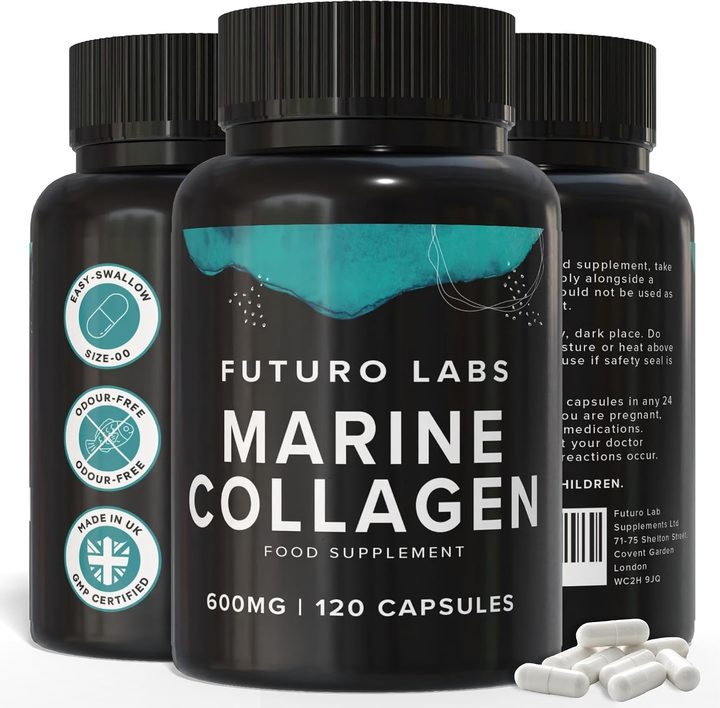
Our brand: the worked example on this page
Futuro Labs Marine Collagen
- 28p a day
- 120 capsules, 2 capsules daily
- Lab tested
- Made in the UK
The capsule half of the pairing, for the vitamin C line beside the shake: Futuro Labs Marine Collagen on Amazon UK, 2 capsules, 1200mg hydrolysed type 1 marine collagen with 12mg vitamin C at 15% NRV plus zinc, 120 for £16.99, 28p a day. Full label breakdown. Whey and collagen together in detail is on the whey page; whether collagen counts as protein on the counting page.
The shake's ledger, what whey brings and what collagen brings, gram by gram
Can I take collagen and protein powder together is a question best answered by a ledger of what each gram brings to the glass, because the two are both called protein and bring very different things, and once the ledger is written the question answers itself. What whey brings: a scoop of whey, twenty to twenty-five grams of protein, carries leucine at around ten percent of its weight, two to two and a half grams a scoop, and the full set of nine essential amino acids in the proportions muscle uses, and it is the leucine dose that switches muscle protein synthesis on after training, the twenty to forty grams of a leucine-rich protein that the synthesis literature identifies as the trigger, so whey holds the register's sentences, protein contributes to a growth in muscle mass and to the maintenance of muscle mass, and is the shake's working ingredient for a lifter. What collagen brings: hydrolysed collagen, ten grams from a scoop or a gram or two from capsules, carries glycine at roughly every third residue, proline and hydroxyproline in quantity, almost no leucine, a fraction of whey's, and no tryptophan at all, an essential amino acid the body cannot make, the collagen composition literature's profile, which is why collagen scores at or near zero on the protein quality scales that rate completeness and digestibility and why the direct comparison trials found whey producing the greater anabolic response, the whey-versus-collagen trials' finding, so collagen holds no muscle claim and no claim of any kind, and it brings grams, glycine and the substrate the collagen research is interested in rather than the trigger. Two ingredients, two ledgers, and neither pretends to be the other once the label is read.
The interaction, which is none, the arithmetic of the glass, how a lifter counts each, and the ledger filed
The interaction: none. Whey and collagen are both proteins digested by the same enzymes into peptides and amino acids and absorbed in the small intestine, and there is no competition for absorption at the amounts in a shake, no timing conflict since neither has a window the other blocks, and no chemical reaction in the glass, the pairing being a taste and texture question only, plain collagen dissolving into a whey shake without changing its flavour and adding a slight body, so a lifter who wants both in one glass puts both in one glass and a lifter who wants them at different times does that, the timing of the whey being the post-session or the protein-target meal and the timing of the collagen being whatever its reason dictates, an hour before loading for the tendon protocol and any time for skin. The arithmetic of the glass: twenty grams of whey and ten of collagen is thirty grams of protein by the nutrition label, since a label counts nitrogen and collagen is nitrogen, and it is a shake with the muscle-building power of the twenty, since the leucine and the essential amino acids that drive synthesis came from the whey and the collagen added grams that muscle cannot use to build itself, the protein quality literature's reason for scoring it near zero, so the shake is not thirty grams of muscle protein and is not worse than twenty grams of whey alone either, the collagen neither helping nor hindering what the whey does. How a lifter counts each: the whey counts in full toward the muscle target of around 1.6 grams per kilogram a day, the protein intake literature's range; the collagen counts toward the total on a label and not toward the muscle target, the counting page's three ledgers, being taken instead for its own reason, the tendon protocol's fifteen grams with vitamin C an hour before loading or the skin trials' 2.5 to 10 grams, and a lifter who replaces some of the whey with collagen to save money has traded leucine for glycine and should not. The vitamin C line sits beside the shake: collagen holds no claim and vitamin C holds the register's collagen formation sentence, so a capsule with vitamin C or a tablet beside a plain powder supplies the pairing the research used. The ledger filed: whey bringing leucine and the essential amino acids that switch synthesis on, collagen bringing glycine, proline and hydroxyproline with almost no leucine and no tryptophan, no interaction, thirty grams by the label with the power of the twenty, and each counted for what it brings, with the worked example being the capsule half of the pairing for the vitamin C line, £16.99 for 120 at 28p a day.
| The ingredient | What each gram brings | What it counts toward |
|---|---|---|
| Whey, 20 to 25g | Leucine at around ten percent; all nine essential amino acids | The muscle target in full; the register's muscle sentences |
| Collagen, 10g | Glycine at every third residue, proline, hydroxyproline; almost no leucine; no tryptophan | The label's total; its own reason; no claim |
| The interaction | None: same enzymes, no competition, no timing conflict | Taste and texture only |
| The glass | 20g whey plus 10g collagen | 30g protein by the label; the anabolic power of the 20 |
| The timing | Whey after training or at a protein meal; collagen when its reason dictates | Together or apart, by preference |
| The vitamin C line | Vitamin C holds the only collagen sentence | A capsule with it, or a tablet beside a plain powder |
The verdict, two proteins that share a glass without interacting and are counted for different things
Can I take collagen and protein powder together: yes, by the shake's ledger, whey bringing leucine at around ten percent and the full set of essential amino acids that switch muscle protein synthesis on and holding the register's muscle sentences, collagen bringing glycine, proline and hydroxyproline with almost no leucine and no tryptophan, scoring at or near zero on protein quality scales and holding no claim, the two not interacting, competing or conflicting in timing, so that a shake of twenty grams of whey and ten of collagen is thirty grams of protein by the label with the muscle-building power of the twenty, the whey counted toward the muscle target and the collagen toward its own reason with a vitamin C line beside it. The capsule half of the pairing for the vitamin C line: Futuro Labs Marine Collagen, 1200mg type 1 with 12mg vitamin C, 120 for £16.99 at 28p a day.
What to check on the label
- Write the ledger: whey brings leucine, collagen brings glycine.
- Mix them freely: no interaction, taste and texture only.
- Count the whey toward the muscle target: in full.
- Count the collagen toward its own reason: not the muscle target.
- Never swap whey for collagen to save money: leucine for glycine is a bad trade.
Our brand
The worked example: Futuro Labs Marine Collagen
Futuro Labs Marine Collagen: 2 capsules daily, 1200mg hydrolysed type 1 marine collagen with 12mg vitamin C and 1.5mg zinc (15% NRV each), 120 capsules for £16.99, 60 days at 28p a day, lab-tested, UK GMP made. Slim veggie-shell capsules, odour free. Fish derived: pescatarian, not vegetarian or vegan.
- Collagen per serving
- 1200mg hydrolysed type 1 marine (fish)
- Co-factors
- vitamin C 12mg (15% NRV), zinc 1.5mg (15% NRV)
- Serving
- 2 capsules a day
- Bottle
- 120 capsules, 60 days
- Price
- £16.99 (28p a day)
- Capsule
- slim size 00, veggie shell, odour free
Questions people also ask
Can I mix collagen powder into my whey protein shake?
Yes: plain hydrolysed collagen dissolves into a whey shake without changing its flavour and adds a slight body, the two are digested by the same enzymes with no competition for absorption and no timing conflict, and the shake is the whey's muscle-building power plus the collagen's grams and glycine.
Does collagen make my protein shake better for muscle?
No: the leucine and the essential amino acids that switch muscle protein synthesis on come from the whey, and collagen adds glycine, proline and hydroxyproline with almost no leucine and no tryptophan, so a shake of twenty grams of whey and ten of collagen builds muscle like the twenty and reads thirty on the label.
Should I take collagen and whey at the same time?
By preference: there is no interaction either way, the whey's timing is the post-session or the protein-target meal, and the collagen's timing is its reason's, an hour before loading with vitamin C for the tendon protocol or any time for skin, so together in one glass or apart across the day both work.
Can collagen replace some of my protein powder?
Not for muscle: replacing whey with collagen trades leucine and a complete essential amino acid profile for glycine and a protein quality score near zero, and the direct comparison trials found whey producing the greater anabolic response, so the whey stays for the muscle target and the collagen is added for its own reason rather than swapped in.
Do I need vitamin C with collagen and whey?
For the collagen's claim and the research pairing, yes: collagen holds no claim and vitamin C holds the register's collagen formation sentence, and the pre-loading research paired collagen with roughly 50mg of vitamin C, so a capsule that carries it or a tablet beside a plain powder supplies the line, with the whey needing nothing.
Sources
- The collagen composition literature: amino acid analyses show glycine at roughly every third residue with high proline and hydroxyproline, low leucine and no tryptophan. PubMed record
- Comparative protein research: the leucine content of a protein drives its muscle protein synthesis response, with whey outperforming collagen in direct comparisons. PubMed record
- The direct comparison trials: randomised studies pitting whey against collagen peptides on muscle protein synthesis and lean mass, in which whey consistently produced the greater anabolic response. PubMed record
- The muscle protein synthesis literature: resistance exercise and a leucine-rich protein dose of around 20 to 40 grams stimulate muscle protein synthesis for hours, with total daily protein, energy availability and the training stimulus determining net gain, and no trial of magnesium supplementation on muscle protein synthesis in trained adults. PubMed record