Ghost Fitness/Collagen/What is the best time to take collagen for skin?
What is the best time to take collagen for skin?
The short answer
The trials never picked a time: the oral collagen skin trials gave 2.5 to 10 grams a day for eight to twelve weeks and measured elasticity and hydration at the end, specifying no hour, because the epidermis turns over in around four weeks and the dermis far more slowly. The variable that mattered was daily consistency across the weeks. The real decisions: the hour you will not miss, fed or fasted as you prefer, and vitamin C beside it.
- The trials2.5 to 10 grams a day, eight to twelve weeks, elasticity and hydration measured at the end; no time of day specified; small, industry funded, no claim
- The skin's clocksthe epidermis turns over in around four weeks; the dermis, where the collagen lives, far more slowly
- The variable that mattereddaily consistency across the weeks
- The real decisionsthe hour you will not miss; fed or fasted by preference; vitamin C beside it for the register's skin sentence
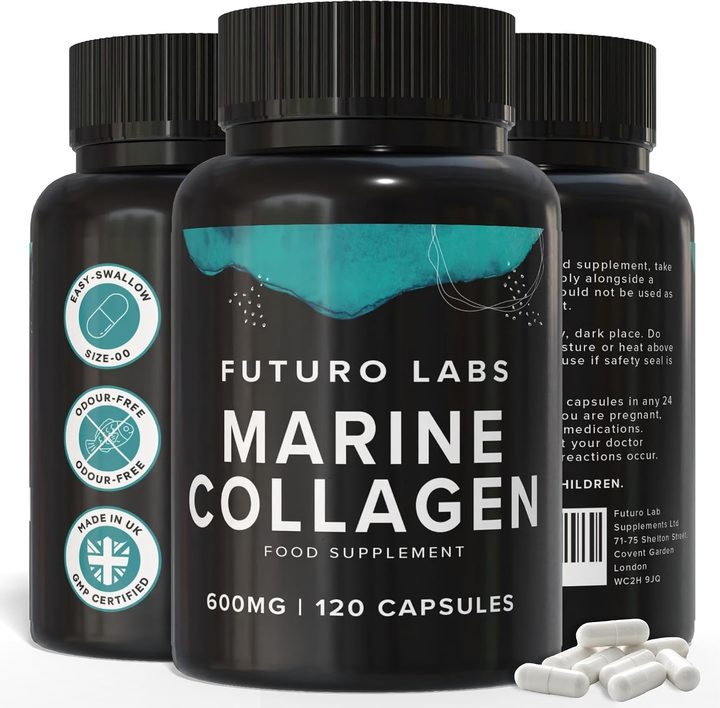
Our brand: the worked example on this page
Futuro Labs Marine Collagen
- 28p a day
- 120 capsules, 2 capsules daily
- Lab tested
- Made in the UK
Two capsules at the hour you will not miss, with the vitamin C line built in: Futuro Labs Marine Collagen on Amazon UK, 2 capsules, 1200mg hydrolysed type 1 marine collagen with 12mg vitamin C and 1.5mg zinc at 15% NRV each, 120 for £16.99, 28p a day. Full label breakdown. The best time in general is on the best-time page; the best form for skin on the skin form page.
The trials that never picked a time, and the skin's clocks that explain why
What is the best time to take collagen for skin is a question the trials that produced the skin evidence never asked, and the honest page explains why they did not need to, because the skin's own clocks make an hour irrelevant. The trials: the randomised trials of oral collagen peptides on skin gave 2.5 to 10 grams of hydrolysed collagen a day for eight to twelve weeks and measured skin elasticity, hydration and in some the density of the dermis by instrument at the end, reporting small improvements in trials that are small, short and mostly industry funded, with no authorised claim resulting, the skin trial literature's shape, and none of them specified a time of day, a fasted or fed state or a relationship to sleep, the instruction being a daily dose for the weeks of the study, so the evidence such as it is belongs to a daily habit and not to an hour. The skin's clocks explain the omission: the epidermis, the outer layer, turns over in around four weeks, a cell born at the base reaching the surface and shedding a month later, and the dermis beneath it, where the collagen the trials target lives and where elasticity is decided, turns over far more slowly, its collagen replaced over months and years, the skin biology literature's timescales, so nothing a dose does on a given hour reaches a measurable result and the only thing that could is a supply sustained across the weeks a dermis needs to change, which is why the trials ran for eight to twelve weeks and why they measured at the end rather than the next morning. The variable the trials controlled, then, was daily consistency, and a reader who asks about the hour is asking about the one thing the trials showed does not matter.
The three real decisions, the hour, the stomach and the vitamin C, the night-time story, and the timing filed
The three real decisions are the ones the trials leave a reader, and none is a clock. The hour you will not miss: since consistency across the weeks is the variable, the best time is the time a dose survives contact with a real life, the habit literature's finding that a fixed anchor, the same meal or the same cup, keeps a routine where a floating one lapses, so a reader who drinks coffee every morning stirs a powder into it, a reader who takes capsules with dinner takes them with dinner, and a reader who tries to remember a floating dose forgets it by week three, the one outcome that would waste the tub. Fed or fasted: collagen peptides are absorbed whether or not a meal is present, small peptides and amino acids appearing in the blood within hours either way, and the absorption question that governs fish oil does not apply to a protein, so the choice is the stomach's, a reader who dislikes a powder on an empty stomach taking it with food and a reader who finds capsules sit better fasted taking them so, with neither changing what reaches the dermis over the weeks. Vitamin C beside it: collagen itself holds no claim, and vitamin C holds the register's sentence that it contributes to normal collagen formation for the normal function of skin, the claims register's allocation, and is the cofactor without which collagen cannot be cross-linked, the scurvy literature's lesson, so the one pairing that matters is vitamin C at a meaningful amount taken with the collagen, built into a capsule or added as a tablet beside a plain powder, at any hour. The night-time story deserves its paragraph, since the beauty shelf tells it: the claim that collagen taken at night works while you sleep rests on the fact that skin repairs overnight, which is true, and skips the fact that the amino acids of a dose taken at any hour are in the body's pool by night regardless, a dose at breakfast being as present at midnight as a dose at bedtime, so the night-time instruction is a marketing timing and not a physiological one, harmless to follow and unnecessary. The timing filed: trials that gave a daily dose for eight to twelve weeks without an hour, skin clocks of weeks and months that make an hour irrelevant, consistency as the variable, the hour you will not miss, fed or fasted by preference and vitamin C beside it as the three real decisions, and the night-time story as marketing, with the worked example being two capsules at the hour you will not miss with the vitamin C line built in, £16.99 for 120 at 28p a day.
| The question | The answer | Why |
|---|---|---|
| What time did the skin trials use? | None specified: a daily dose for eight to twelve weeks | Measured elasticity and hydration at the end, not the next morning |
| Why does the hour not matter? | The epidermis turns over in around four weeks; the dermis far more slowly | Nothing a dose does in an hour reaches a result |
| What mattered? | Daily consistency across the weeks | The variable the trials controlled |
| Morning or night? | The hour you will not miss, anchored to a fixed meal or cup | A floating dose lapses by week three |
| Fed or fasted? | By preference | Peptides absorb either way; the fish oil absorption rule does not apply to a protein |
| With what? | Vitamin C at a meaningful amount | The only nutrient with the collagen formation sentence for skin; the cofactor |
The verdict, an hour the trials never chose and the skin cannot notice, and a daily habit with vitamin C beside it that is the whole of the answer
What is the best time to take collagen for skin: the trials never picked one, the oral collagen skin trials having given 2.5 to 10 grams a day for eight to twelve weeks and measured elasticity and hydration at the end without specifying morning or night, fasted or fed, because the epidermis turns over in around four weeks and the dermis where the collagen lives turns over far more slowly, so that nothing a dose does in an hour reaches a result and daily consistency across the weeks was the variable that mattered, leaving three real decisions, the hour a reader will not miss anchored to a fixed meal or cup, fed or fasted by preference since peptides absorb either way, and vitamin C beside it as the one nutrient holding the register's collagen formation sentence for skin, with the night-time story being marketing rather than physiology. Two capsules at the hour you will not miss with the vitamin C line built in: Futuro Labs Marine Collagen, 1200mg type 1 with 12mg vitamin C and 1.5mg zinc, 120 for £16.99 at 28p a day.
What to check on the label
- Stop asking the clock: the trials never set one and the skin cannot notice.
- Anchor the dose: the same meal or cup every day.
- Take it fed or fasted as you like: a protein absorbs either way.
- Put vitamin C beside it: the only skin sentence that mentions collagen.
- Ignore the night-time story: a breakfast dose is in the pool by midnight.
Our brand
The worked example: Futuro Labs Marine Collagen
Futuro Labs Marine Collagen: 2 capsules daily, 1200mg hydrolysed type 1 marine collagen with 12mg vitamin C and 1.5mg zinc (15% NRV each), 120 capsules for £16.99, 60 days at 28p a day, lab-tested, UK GMP made. Slim veggie-shell capsules, odour free. Fish derived: pescatarian, not vegetarian or vegan.
- Collagen per serving
- 1200mg hydrolysed type 1 marine (fish)
- Co-factors
- vitamin C 12mg (15% NRV), zinc 1.5mg (15% NRV)
- Serving
- 2 capsules a day
- Bottle
- 120 capsules, 60 days
- Price
- £16.99 (28p a day)
- Capsule
- slim size 00, veggie shell, odour free
Questions people also ask
Is it better to take collagen in the morning or at night for skin?
Neither: the skin trials gave a daily dose for eight to twelve weeks without specifying an hour, the epidermis turns over in around four weeks and the dermis far more slowly, so an hour cannot reach a result and the best time is the one a reader will not miss, anchored to a fixed meal or cup, since consistency across the weeks was the variable the trials controlled.
Should collagen be taken on an empty stomach for skin?
By preference only: collagen peptides are absorbed whether or not a meal is present, the small peptides and amino acids appearing in the blood within hours either way, and the fatty-meal absorption rule that governs fish oil does not apply to a protein, so a reader takes it fed or fasted as their stomach prefers.
Does collagen work better at night while you sleep?
No: skin does repair overnight, but the amino acids of a dose taken at any hour are in the body's pool by night regardless, a breakfast dose being as present at midnight as a bedtime one, so the night-time instruction is a marketing timing rather than a physiological one, harmless to follow and unnecessary.
How long does collagen take to work for skin?
The trials measured at eight to twelve weeks of daily 2.5 to 10 grams and reported small improvements in instrument-measured elasticity and hydration, in studies that are small, short and mostly industry funded with no claim resulting, so a reader holds a modest expectation over weeks rather than any expectation over days.
Do I need to take vitamin C with collagen for skin?
For the claim and the biology, yes: collagen holds no claim and vitamin C contributes to normal collagen formation for the normal function of skin on the register, and vitamin C is the cofactor without which collagen cannot be cross-linked, so it is taken at a meaningful amount with the collagen, built into a capsule or as a tablet beside a plain powder, at any hour.
Sources
- The collagen and skin trial literature: randomised studies of oral collagen peptides on skin elasticity and hydration, mostly small, short and industry funded, with no authorised claim resulting. PubMed record
- The skin biology literature: the epidermis turns over in around four weeks while dermal collagen, the layer supplements target, turns over far more slowly, so the oral collagen skin trials measured elasticity and hydration after eight to twelve weeks of daily intake with no timing of day specified, consistency across weeks rather than time of day being the variable the trials controlled. PubMed record
- The scurvy literature: vitamin C deficiency impairs collagen synthesis through failed proline and lysine hydroxylation, producing the classic connective-tissue signs that resolve with vitamin C repletion. PubMed record
- Retained Regulation (EC) No 1924/2006 on nutrition and health claims made on foods, and the Great Britain nutrition and health claims register. https://www.gov.uk/government/publications/great-britain-nutrition-and-health-claims-nhc-register