Ghost Fitness/Omega-3/Is fish oil worth taking for a natural bodybuilder?
Is fish oil worth taking for a natural bodybuilder?
The short answer
Worth it as health insurance, not as a muscle purchase: 17p a day banks the authorised heart claim and replaces the oily fish a rigid diet skips. It adds no anabolic edge. Creatine, protein and sleep outrank it for gains.
- 17pthe price at which the worth-it question gets easy
- 0anabolic edge: the muscle research runs mixed-to-null in the trained
- The rigid dietchicken, rice, whey: where the oily fish quietly vanished
- Marginal gainsthe natty instinct this page respects, and re-aims at sleep
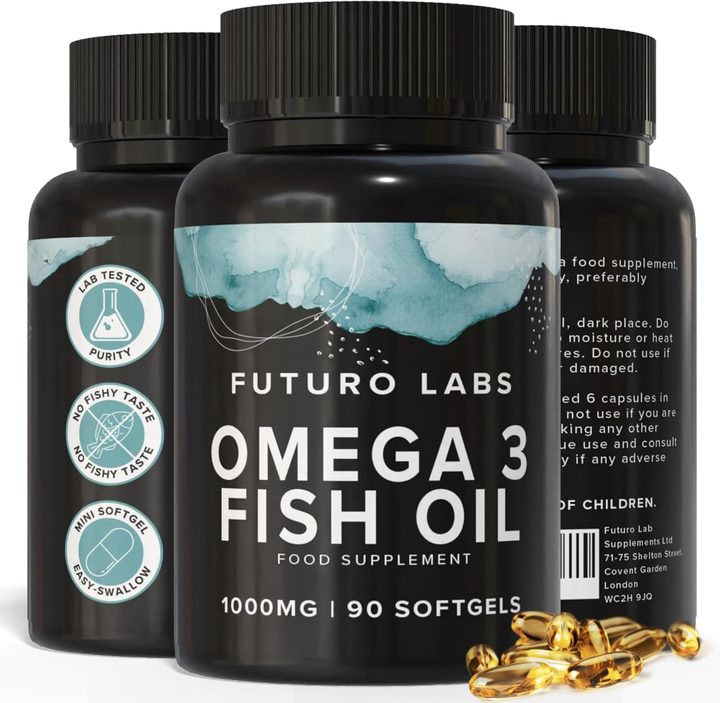
Our brand: the worked example on this page
Futuro Labs Omega 3 Fish Oil
- 17p a day
- 90 softgels, 1 softgel daily
- Lab tested
- Made in the UK
The health line-item, priced as one: Futuro Labs Omega 3 Fish Oil on Amazon UK, 300mg EPA+DHA per softgel, £14.99 for 90 days. Label breakdown. The muscle evidence in full is on the muscle growth page; recovery on the recovery page.
The natty logic this page respects, and where it points honestly
A natural bodybuilder's supplement thinking runs on marginal-gains logic, no pharmacology means every legal one-percent matters, and the instinct is sound while the aim is often off, because the question worth is it taking has two different ledgers. The gains ledger, where the instinct usually shops, is thin: the muscle protein synthesis findings came at 4g in older adults, the trained-lifter hypertrophy and soreness records run mixed to null, and no muscle, strength or recovery claim exists, verdicts this section's dedicated pages lay out in full, so as a one-percent gains purchase fish oil is buying a rounding error at best. The health ledger is where the purchase actually pays: a bodybuilder is running a cardiovascular system hard for decades, the one authorised omega-3 claim in Britain is precisely there, normal heart function at 250mg of combined EPA and DHA, and the marginal-gains instinct, properly aimed, includes staying in the sport for thirty years, which is a heart project.
The diet audit that decides it, and the budget ranking for the gains money
The deciding audit takes one look at the meal plan. Bodybuilding diets are rigid by design, and their protein rotation, chicken, mince, whey, eggs, white fish on a cut, is exactly the rotation that deletes oily fish for months at a stretch, mackerel and sardines being nobody's macro-friendly staple, which means the fish-first answer this site always gives first, two portions weekly with one oily, fails in practice for this population more reliably than almost any other, and the 17p softgel exists for precisely that failure: the cheapest way a chicken-and-rice year keeps the 250mg territory covered. Then the budget ranking, for the natural who asked worth it in pounds: protein to target and creatine's authorised 3g performance claim take the gains money first, sleep and calories cost attention rather than cash and outrank everything, and fish oil enters the basket fourth or fifth, as the health line-item, never competing with the gains items because it was never one. On a tight month, drop the fish oil last among health items and never instead of the creatine, because their jobs do not overlap.
| Item | Ledger | Verdict at its price |
|---|---|---|
| Fish oil for muscle or recovery | Gains | Not worth it: mixed-to-null in the trained, no claims |
| Fish oil for the heart claimOurs | Health | Worth it at 17p, for a fish-free training diet |
| Creatine at 3g daily | Gains | The authorised performance claim: first gains money |
| Protein to 1.6g to 2.2g/kg | Gains | The material: second gains money |
| Sleep and sufficient calories | Both | Free, and outrank the whole shelf |
| Oily fish twice weekly | Health | Beats the softgel where the diet allows it, which it rarely does here |
The verdict, priced for the person asking
Is fish oil worth taking for a natural bodybuilder: yes at 17p and no at any gains expectation, the purchase surviving as exactly what the honest label makes it, health insurance for a cardiovascular system doing decades of hard training on a diet that deleted its oily fish, and dying the moment it is asked to add a kilogram to anything. The worked version: Futuro Labs Omega 3 Fish Oil, one softgel with the evening meal that was happening anyway, 180mg EPA and 120mg DHA clearing the 250mg heart-claim floor, £14.99 for 90 days, 17p beside the creatine that earns the gains money and the sleep that earns everything else. The natural's marginal-gains instinct was right all along; it just files this one under staying in the game, which is the margin that compounds longest.
What to check on the label
- Two ledgers: gains and health: fish oil only ever belonged on the second.
- The gains case is a rounding error: mixed-to-null trained evidence, no claims.
- The health case is real and cheap: the 250mg heart claim on a fish-free diet, 17p.
- Budget order: protein and creatine first, sleep free and above all, fish oil as the health line.
- Chicken-and-rice diets delete oily fish: exactly the failure the softgel exists for.
Our brand
The worked example: Futuro Labs Omega 3 Fish Oil
Futuro Labs Omega 3 Fish Oil: 1 softgel daily with food, 1000mg fish oil providing 180mg EPA and 120mg DHA (300mg combined), 90 softgels for £14.99, 17p a day, lab-tested purity, UK GMP made. Gelatin shell, so not vegetarian.
- Fish oil per softgel
- 1000mg
- EPA / DHA per softgel
- 180mg / 120mg (300mg combined)
- Serving
- 1 softgel a day
- Bottle
- 90 softgels, 90 days
- Price
- £14.99 (17p a day)
- Softgel
- mini softgel, no fishy taste
Questions people also ask
Will fish oil help me build muscle as a natural?
Not measurably: the trained-population evidence runs mixed to null and no muscle claim exists. Buy it for the heart claim or not at all.
Is fish oil worth it on a tight supplement budget?
After protein and creatine, yes at 17p as the health line-item: it competes with nothing in the gains column because it was never in it.
Do natural bodybuilders need more omega-3 than average people?
No: the 250mg adequate intake does not scale with training. What naturals reliably have is the fish-free diet that makes the floor worth guaranteeing.
Should I take fish oil on a cut?
Yes, unchanged: cuts strip oily fish even harder, and the softgel holds the claim territory for nine calories a day.
What actually gives a natural an edge?
Sleep, calories matched to the phase, protein to target, progressive programming, and creatine's authorised 3g claim: the boring compound interest fish oil never was.
Sources
- Futuro Labs Omega 3 Fish Oil listing: 1000mg fish oil per softgel providing 180mg EPA and 120mg DHA, 90 softgels. Amazon UK, accessed 31 August 2026. https://www.amazon.co.uk/dp/B0CP9T3BTN
- McGlory C, Calder PC, Nunes EA. The influence of omega-3 fatty acids on skeletal muscle protein turnover in health, disuse, and disease. Frontiers in Nutrition 2019;6:144. PubMed record
- Smith GI, Atherton P, Reeds DN, et al. Dietary omega-3 fatty acid supplementation increases the rate of muscle protein synthesis in older adults: a randomized controlled trial. American Journal of Clinical Nutrition 2011;93(2):402-412. PubMed record
- Review evidence on omega-3 supplementation and exercise-induced muscle damage and soreness: small positive findings mainly in untrained participants, mixed-to-null results in trained populations. PubMed record
- EFSA Panel on Dietetic Products, Nutrition and Allergies. Scientific Opinion on the substantiation of health claims related to creatine and increase in physical performance during short-term, high intensity, repeated exercise bouts. EFSA Journal 2011;9(7):2303. https://efsa.onlinelibrary.wiley.com/doi/10.2903/j.efsa.2011.2303
- Kreider RB, et al. International Society of Sports Nutrition position stand: safety and efficacy of creatine supplementation in exercise, sport, and medicine. Journal of the International Society of Sports Nutrition 2017;14:18. PubMed record
- EFSA Panel on Dietetic Products. Scientific opinion on the substantiation of health claims related to EPA and DHA and normal function of the heart (250mg daily condition of use). EFSA Journal 2010;8(10):1796. https://www.efsa.europa.eu/en/efsajournal/pub/1796