Ghost Fitness/Magnesium/Which magnesium is best for cramps during training?
Which magnesium is best for cramps during training?
The short answer
For cramps during training, sodium, fluid and pacing beat any capsule; mid-session cramping is fatigue and, in long hot sessions, salt loss. Magnesium works in the background: 300mg elemental glycinate daily covers the intake side. Stretch it when it hits.
- Fatiguethe main driver of cramps during exercise
- Sodium and fluidwhat matters in long, hot sessions
- 300mgelemental daily, the background magnesium
- 22pa day for the worked example
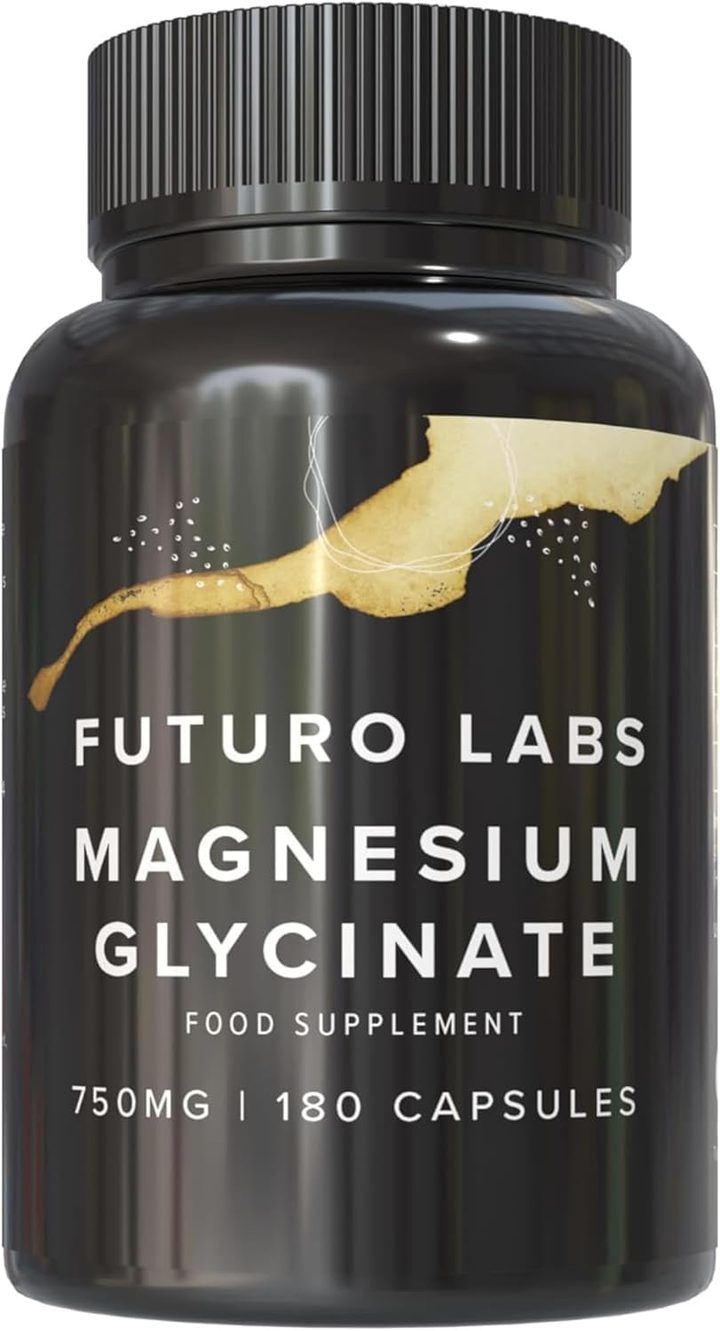
Our brand: the worked example on this page
Futuro Labs Magnesium Glycinate
- 22p a day
- 180 capsules, 2 capsules daily
- Lab tested
- Made in the UK
The background magnesium: Futuro Labs Magnesium Glycinate on Amazon UK, 180 capsules for £19.99. Label breakdown. The general cramps page is which magnesium is best for muscle cramps.
What is happening when you cramp mid-session
The modern reading of exercise-associated muscle cramp, laid out in Schwellnus's review, is altered neuromuscular control in a fatigued muscle: the reflexes that inhibit contraction get quieter as fatigue builds, the muscle fires unopposed, and it happens in the muscle you just worked, late in the session, often in a shortened position, the cramping calf on a pointed toe being the classic. Maughan and Shirreffs' 2019 review adds the second mechanism for a subset: large sodium and fluid losses in long, hot sessions. Neither mechanism runs on the magnesium you did or did not take that morning, which is why the in-session answer is not a capsule.
What to do in the moment, and in the session
When a cramp hits, stop the set and gently stretch the muscle to length; a cramping calf straightens out with the toes pulled up, a hamstring with the leg extended. It passes in under a minute, and the muscle stays twitchy afterwards, so drop the intensity on that muscle for the rest of the session. Miller's 2010 trial found pickle juice shortened electrically induced cramps by about 37 seconds through a reflex in the throat, which is a curiosity worth knowing and not a system to build. For prevention inside the session: pace the early work so fatigue arrives later, and in anything long and sweaty, drink to thirst with sodium in the bottle, at least 500mg per litre, rather than plain water.
| Intervention | When it acts | Evidence | Verdict |
|---|---|---|---|
| Stretching the cramping muscle | In the moment | Standard, reliable | The actual treatment |
| Pacing and conditioning | Within the session and across weeks | The fatigue mechanism | The biggest preventer |
| Sodium and fluid in the bottle | During long, hot sessions | Loss-linked cramping in heavy sweaters | Yes, for that setting |
| Pickle juice | A cramp in progress | One trial, reflex mechanism, about 37 seconds faster | A curiosity |
| Magnesium glycinate, 300mg elemental dailyOurs | Background, over weeks | Helps where intake was low; Cochrane negative for idiopathic cramps | The intake side, not the in-session side |
| Magnesium taken right before or during training | Never acutely | No acute mechanism or trial | No |
Where magnesium honestly fits, and the worked example
Magnesium is the background variable: training raises losses, narrow diets keep intake low, and a low intake makes muscle and nerve more excitable, which stacks the deck toward cramping without causing any single cramp. Keeping intake at the reference level removes that standing disadvantage, which is what the authorised wording, normal muscle function and electrolyte balance, actually describes. The worked example, Futuro Labs Magnesium Glycinate, gives 300mg elemental from 1500mg bisglycinate at 20% in 2 capsules, 80% NRV, taken with the evening meal daily, not before sessions; vegan, made in the UK under GMP and BRC certification, test panels shown, 180 capsules for £19.99, 22p a day. Which magnesium is best for cramps during training is the one working quietly in the background while sodium, pacing and conditioning do the visible work.
What to check on the label
- Stretch, in the moment: the cramping muscle taken gently to length.
- Sodium in the bottle for long, hot sessions: at least 500mg per litre.
- Pacing and conditioning, because fatigue is the main driver.
- Magnesium as background: 300mg elemental as glycinate daily, evening meal, not pre-session.
- No in-session magnesium products; there is no acute mechanism.
Our brand
The worked example: Futuro Labs Magnesium Glycinate
Futuro Labs Magnesium Glycinate is the background half of the answer: 300mg elemental per 2 capsules (80% NRV) from bisglycinate 20%, taken daily with the evening meal, vegan, UK made, test panels shown, 22p a day from a £19.99 bottle of 180.
- Elemental magnesium per serving
- 300mg (80% NRV)
- Form
- magnesium bisglycinate 20%
- Serving
- 2 capsules a day
- Bottle
- 180 capsules, 90 days
- Price
- £19.99 (22p a day)
- Capsule
- vegetarian shell, vegan product
Questions people also ask
What stops a cramp during a workout?
Stopping the set and gently stretching the muscle to length. It passes in under a minute; go easier on that muscle afterwards.
Should I take magnesium before training to prevent cramps?
No. There is no acute effect. Take 300mg elemental daily with the evening meal and let sodium, fluid and pacing handle the session.
Why do I cramp at the end of hard sessions?
Fatigue quiets the reflexes that inhibit contraction, so the worked muscle fires unopposed. Pacing and conditioning move that point later.
Do electrolyte drinks stop training cramps?
They address the sodium and fluid mechanism in long, hot sessions. In a cool hour-long lifting session they add little.
Which magnesium is best if I cramp in training and eat a narrow diet?
Glycinate at 300mg elemental daily as the background fix. Futuro Labs Magnesium Glycinate: 22p a day, UK made, panels shown.
Sources
- Futuro Labs Magnesium Glycinate listing, Amazon UK, label and price checked 31 August 2026. https://www.amazon.co.uk/dp/B0BT7Z5VQW
- Schwellnus MP. Cause of exercise associated muscle cramps (EAMC): altered neuromuscular control, dehydration or electrolyte depletion? British Journal of Sports Medicine 2009;43(6):401-408. https://pubmed.ncbi.nlm.nih.gov/18981039/
- Maughan RJ, Shirreffs SM. Muscle cramping during exercise: causes, solutions, and questions remaining. Sports Medicine 2019;49(Suppl 2):115-124. PubMed record
- Miller KC, et al. Reflex inhibition of electrically induced muscle cramps in hypohydrated humans. Medicine and Science in Sports and Exercise 2010;42(5):953-961. PubMed record
- Garrison SR, Korownyk CS, Kolber MR, et al. Magnesium for skeletal muscle cramps. Cochrane Database of Systematic Reviews 2020, Issue 9, CD009402. PubMed record
- Nielsen FH, Lukaski HC. Update on the relationship between magnesium and exercise. Magnesium Research 2006;19(3):180-189. PubMed record
- EFSA Panel on Dietetic Products, Nutrition and Allergies. Scientific Opinion on the substantiation of health claims related to magnesium. EFSA Journal 2010;8(10):1807. https://efsa.onlinelibrary.wiley.com/doi/10.2903/j.efsa.2010.1807
- Expert Group on Vitamins and Minerals. Safe Upper Levels for Vitamins and Minerals. Food Standards Agency, 2003 (magnesium guidance level 400mg a day from supplements). https://cot.food.gov.uk/sites/default/files/vitmin2003.pdf